
There are two kinds of builders in the world.
The first kind has the time, the team, and the craft to design every interface from the ground up. Every pixel considered. Every component purpose-built. Every decision made from first principles.
The second kind has a great idea, a real deadline, and twelve other things on their plate. They don't need a lesson in design theory. They need something that works. Right now, on the stack they already use, without spending a weekend cleaning up someone else's Figma file.
DropHaus was built for the second kind. And it was built by someone who deeply understands both.
The Gap Nobody Was Filling
Shiva Bajpai runs Elysium Designs, a premium brand and product design agency. The kind of studio that works at the top of the market: deep identity work, product strategy, interfaces crafted with real intention. Every engagement starts from scratch, because that's what premium work demands.
But working at that level gives you a clear view of something else entirely. The enormous number of builders, developers, and founders who don't have access to that level of craft and don't need to. They're building SaaS products, launching portfolios, shipping MVPs. They move fast. They often move alone. And the resources available to them? Mostly terrible.
The free Figma kits look good on Dribbble and fall apart on contact with a real project. The paid UI packs are bloated, outdated, or built for a design system nobody uses. The templates are wireframes dressed up in a font. And the so-called premium resources (briefs, proposals, contracts) are generic documents with a $29 price tag.
That's the gap. A market full of capable, motivated people shipping real things. Completely underserved by the tools available to them.
DropHaus exists to close it.
What DropHaus Actually Is
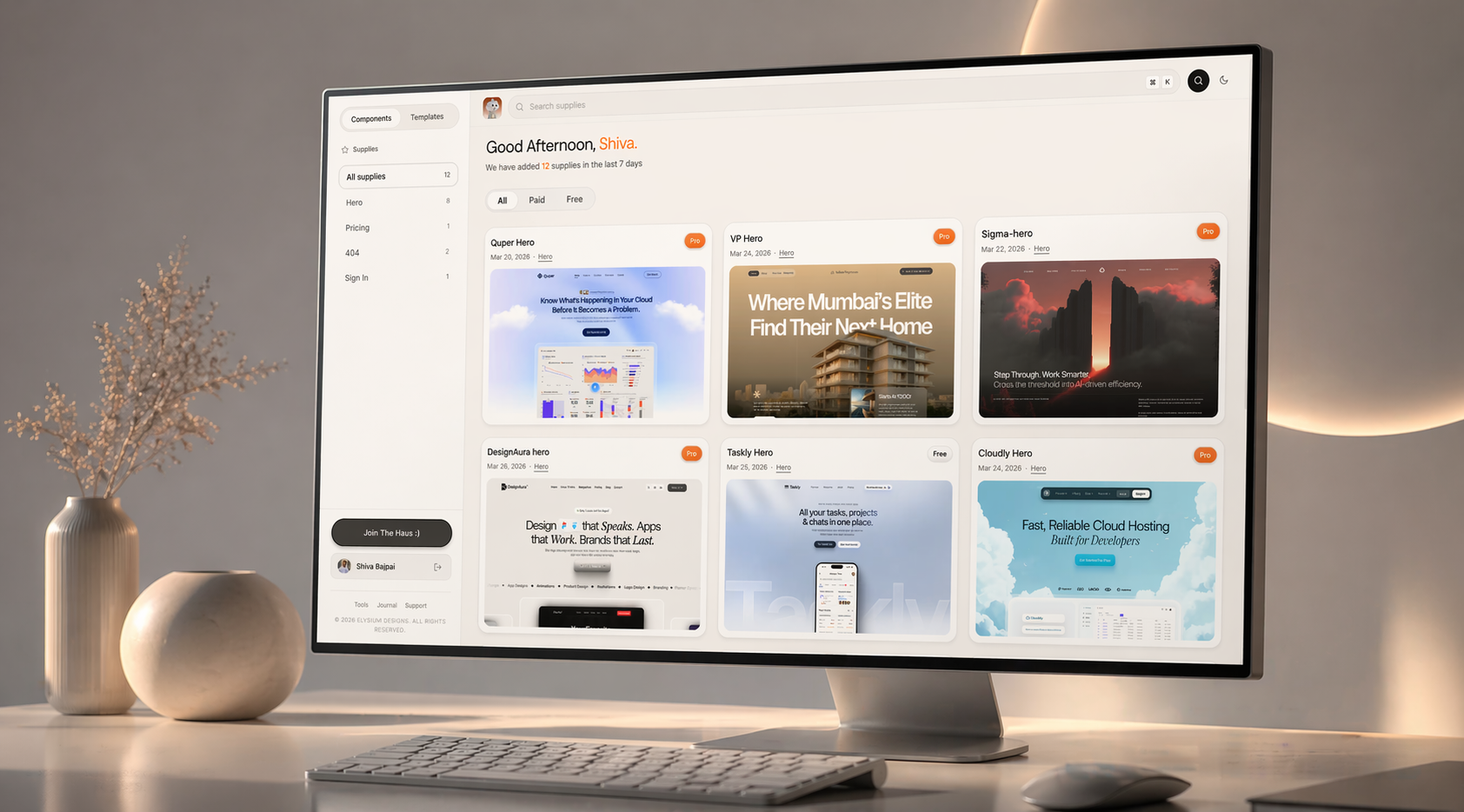
Think of it as three things in one: a component library, a template store, and a design resource hub. Each part solves a different piece of the same problem.
UI Components: Production-Ready, Not Portfolio-Ready
The component library covers every major section needed to build a landing page, SaaS interface, or marketing site. Hero sections, feature grids, pricing tables, testimonial blocks, FAQ sections, CTA sections, footer designs, stats rows, integration displays, use case layouts, sign-in screens, and 404 pages.
Each component is built for Figma and Tailwind CSS, the tools people actually use to ship in 2025. Consistent spacing systems, proper auto-layout, clean class structure. The kind of quality that doesn't require a cleanup sprint before it's useful.
Some are free. Some are Pro. None of them are filler.
Full Templates: Start From Something Worth Starting From
Building a SaaS landing page, a portfolio, a dashboard, or an e-commerce storefront from zero in 2025 is leaving time on the table. Not because the blank canvas is wrong, but because the starting point matters.
DropHaus templates are full-page layouts built with Next.js and Tailwind CSS. Typography set, spacing locked, dark mode built in, responsive behavior considered. You clone it, make it yours, and ship.
These aren't built to sell. They're built to use.
Design Resources: The Business Half Nobody Talks About
Running a design practice or building a product isn't just the design work. It's the brief, the proposal, the contract, the invoice. The documents that protect your time, win the work, and keep projects running cleanly.
DropHaus covers all of it: brief templates, proposal decks, client contracts, statements of work, pricing sheets, invoice templates, UX audit checklists, AI prompt libraries, case study templates, and pitch decks. Not generic boilerplates. Actual working documents built for real use.
Tools Built Into the Platform
A full suite of free design tools: color contrast checker, gradient generator, type scale tool, spacing visualiser, shadow generator, border radius tool, palette generator, Tailwind color picker, easing visualiser, color converter, and token generator.
The micro-decisions that eat ten minutes each, solved in ten seconds.
Who This Is For
DropHaus is not for everyone. It's for three specific types of people.
The Indie Developer or Startup Founder
You can build. Design is the harder part. You know what a good interface looks like, you just can't produce it from scratch in the time you have. DropHaus gives you the components and templates to close that gap immediately. You clone, you customise, you ship. Your competitor is still on slide three of their deck.
The Freelance Designer Moving Fast
You're across multiple clients simultaneously. You can't spend two days on a component that should take two hours. You need a library that works consistently across projects and a set of client documents that don't need rebuilding every engagement.
The Solo Founder Building Their First SaaS
You have the idea, the domain, and the weekend. What you don't have is a design team. DropHaus is the design team you can't afford yet: production-grade UI that makes your product look like it was built by people who've done this before.
The Standard Every Asset Is Held To
DropHaus will never pad the catalogue with mediocre assets to make the numbers look better. Every component, template, and resource is held to one question: is this genuinely useful to someone shipping something real?
That's a harder filter than most platforms apply. It means slower growth in volume and faster trust in quality. New assets ship in drops. Small, considered batches, not a weekly flood that buries the good work.
Where This Goes From Here
DropHaus launched with a focused, high-quality library. More is coming: more components, more templates, more resources, but always on the same terms. Only when it's ready. Only when it's worth having.
The people DropHaus was built for are already out there. Building, shipping, iterating. They don't have time to hunt for resources that almost work. They need something that just does.
The full library is at drophaus.in. Start with whatever you need most today.